The vision: A Web3 democracy
In Web3 governance, we can identify two main concepts mostly described as governance by code and governance of code. The former describes that smart contracts can define governance logic, thereby guiding human interaction and behavior. The latter describes the processes behind developing, maintaining, and updating a decentralized system. Notably, these two processes are distinct. In addition, the governance of current blockchain systems is often considerably centralized and dominated by a few developers, operators, and token holders.
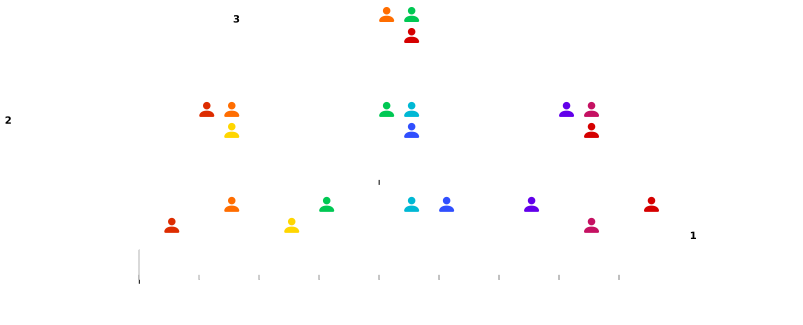
Evocracy enables an algorithmically guided and yet democratic aggregation of proposals. Users can bring up topics, deliberate and take decisions in a decentralized manner. In addition, the same method can be used for users to bring up issues with the infrastructure and collectively develop code solutions from within the system. After a vote-based evaluation of the final code solution, it could automatically be deployed.
With this, the code of the blockchain system would become fully democratic, resulting in a self-updating closed-loop system where users not only democratically decide on content-related outcomes but even on the codebase and infrastructure, and therefore, the governance system itself. This meta-governance system would merge governance by code and governance of code. It has the potential to not only open governance of blockchain systems to much broader communities but also fully overcome centralized authorities, either direct or indirect.